
When modernization is imperative so is corrosion prevention.
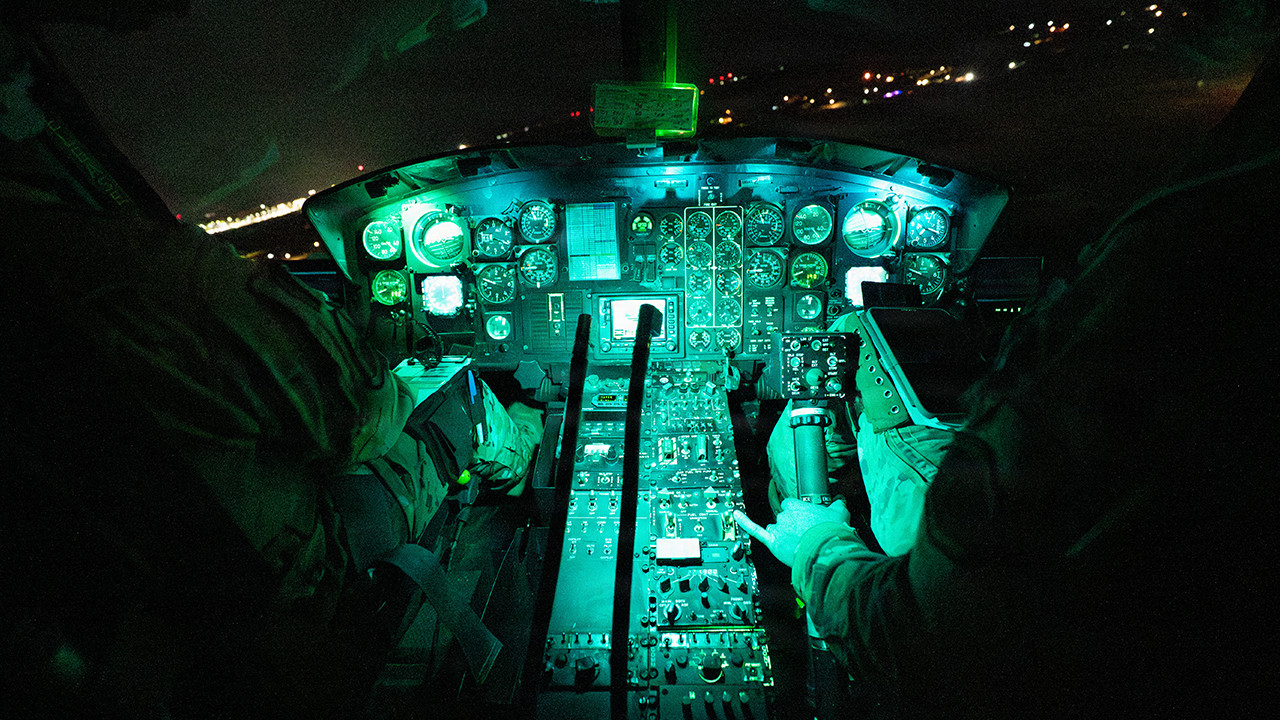
Image courtesy Airman 1st Class Nicholas Rowe
As the military has evolved into a technologically sophisticated force, its vulnerabilities include both the visible and the invisible. Today’s critical systems are no longer defined by just firepower or durability, but by circuitry—dense networks of wiring, sensors, and telecommunications equipment operating at microscopic scales.
Corrosion has quietly and predictably followed this transition.
The consequences of corrosion may be subtle before they are severe. Early-stage corrosion may not shut a system down entirely. Instead, it alters leakage currents, disrupts calibration, or introduces small output errors—what operators sometimes call “gremlins.”
Perhaps most counterintuitive of all, harsh environments are not required. Corrosion can be active even in conditions that appear nearly ideal. Electronics do not need salt spray or extreme humidity to degrade; they simply need time and exposure at microscopic scales.
Military aircraft illustrate the stakes particularly well. Modern avionics have transformed aviation capability, enabling unprecedented precision and connectivity. Yet that same technological density creates vulnerability. Recent data suggests that as many as 30 to 40 percent of avionics failures can be traced back to corrosion. In aviation, where reliability is inseparable from safety, even minor degradation carries outsized consequences.

Recent data suggests that as many as 30 to 40 percent of avionics failures can be traced back to corrosion.
Technology has unquestionably expanded the capability of military assets, but it has also introduced new elements of risk that threaten readiness, mission capability, and soldier safety.
The encouraging news is that prevention has evolved alongside risk. Advances in protective covers, improved aviation insulation systems, and remotely monitored humidity-controlled environments now allow organizations to address corrosion proactively rather than reactively. The challenge is to ensure prevention efforts can keep pace with technological change itself.
To learn how advanced corrosion prevention strategies can help protect mission capability and readiness, connect with one of our subject matter experts here.