
Before You Buy a Protective Cover, Ask These 5 Questions
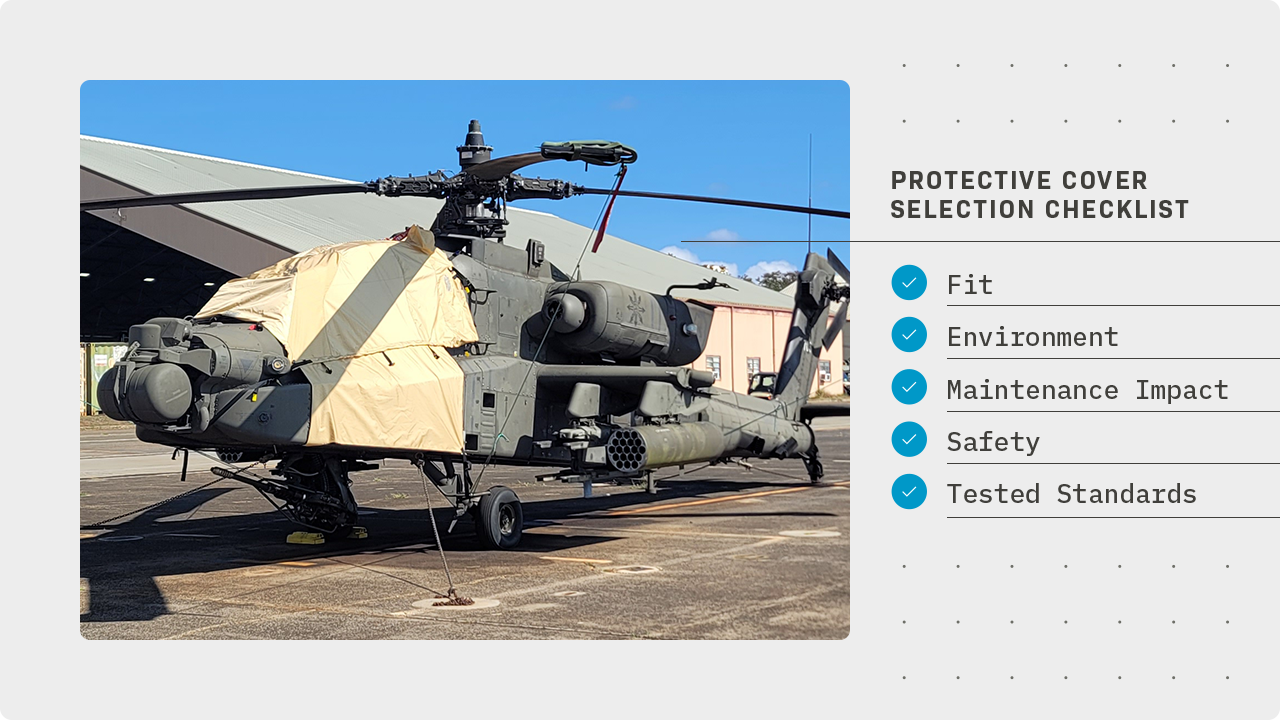
Protective covers may look simple from the outside, but selecting the wrong cover can create more problems than it solves.
A cover that is difficult to handle may not get used consistently. One that traps moisture will contribute to corrosion. A cover that tears, freezes, absorbs fluids, or fits poorly will create work for the very people it’s supposed to help.
In other words, do you have a basic cover or one that protects the asset, supports readiness, and reduces maintenance burden over time? Here are five questions worth asking before selecting a protective cover for military aircraft, vehicles, UAVs, weapons systems, or support equipment.
1. Is the cover designed for the asset, or just draped over it?
Fit matters. A protective cover must do more than sit on top of equipment. It needs to account for the shape of the asset, drainage points, access areas, attachment locations, wind exposure, and how personnel will install and remove it in real conditions.
A poorly fitted cover can leak, tear, shift in high winds, or create pockets where water can collect. It can also become cumbersome enough that teams avoid using it unless they absolutely have to.
That’s why cover designs consider form, fit, and function together. The material matters, but the pattern, attachment system, and ease of use matter, too.
2. Will it protect against the specific environment?
Different operating environments create different threats. In a coastal or island environment, salt air and humidity may be the primary concern. In the desert, fine sand and dust can damage components and foul lubricants. In cold climates, freezing rain and snow can make some covers heavy, brittle, or difficult to remove. In high-UV environments, coatings, seals, lenses, windscreens, and other exposed materials can degrade faster than expected.
A cover should be evaluated against the environment where it will actually be used, not just against a generic idea of weather protection.
Cocoon covers are designed for use across a wide range of applications, including rotary and fixed-wing aircraft, UAVs, vehicles, and weapons systems.
3. Does it reduce maintenance, or create more of it?
A cover should make life easier for maintenance teams, not harder. If a cover absorbs water, it can become heavy and difficult to handle. If it absorbs oils or lubricants, it can become contaminated. If it is fragile, personnel spend unnecessary time repairing or replacing it. If it allows mold or mildew to develop, it creates another problem to manage.
The right cover should reduce the frequency and severity of corrosion-related maintenance, help protect asset condition, and limit unnecessary handling issues.
Cocoon’s cover materials are designed to be waterproof, hydrophobic, oleophobic, washable, lightweight, durable, and freeze-proof, while also filtering sand and dust down to 0.3 microns and avoiding the use of VCIs.
4. Does it address safety as well as readiness?
Corrosion prevention is often discussed in terms of readiness and cost, but safety is part of the equation, too.
Equipment that degrades unexpectedly can put personnel at risk. Covers that are too heavy, frozen, contaminated, or difficult to remove can create handling hazards. Covers used around ordnance or sensitive electronics also need to account for electrostatic discharge.
That is one reason cover material selection should include more than weather resistance. It should include how the cover performs around the people who use the asset, maintain the asset, and depend on the asset.
Cocoon covers include an embedded ESD print to prevent static buildup and are designed without hazardous Vapor Corrosion Inhibitor chemicals.
5. Has the cover been tested against a real standard?
Claims are easy to make. Standards are harder to meet. When evaluating protective covers, it is important to understand whether the product has been tested against a meaningful performance specification. That helps separate a true protective system from a material that simply looks like a cover.
Cocoon Protective Covers meet every requirement of the AMCOM Protective Cover Material Performance Specification and include a three-year warranty. Cover selection is not just a procurement decision, it's a decision that affects readiness, maintenance decision, and lifecycle.
The Right Cover Should Earn Its Place on the Asset
A protective cover should be easy enough to use, durable enough to last, and advanced enough to protect against the real environmental threats facing military assets.
It should help reduce corrosion, protect against adverse weather, support operational capability, improve safety, reduce maintenance man-hours, and extend useful life. That is a lot to ask from a cover. But when the asset underneath is mission-critical, it is exactly what should be expected.
To learn more about Cocoon Protective Covers, contact one of our subject matter experts at info@cocoon-inc.com.