
Covers Are a Sustainment Tool, Not a Stopgap
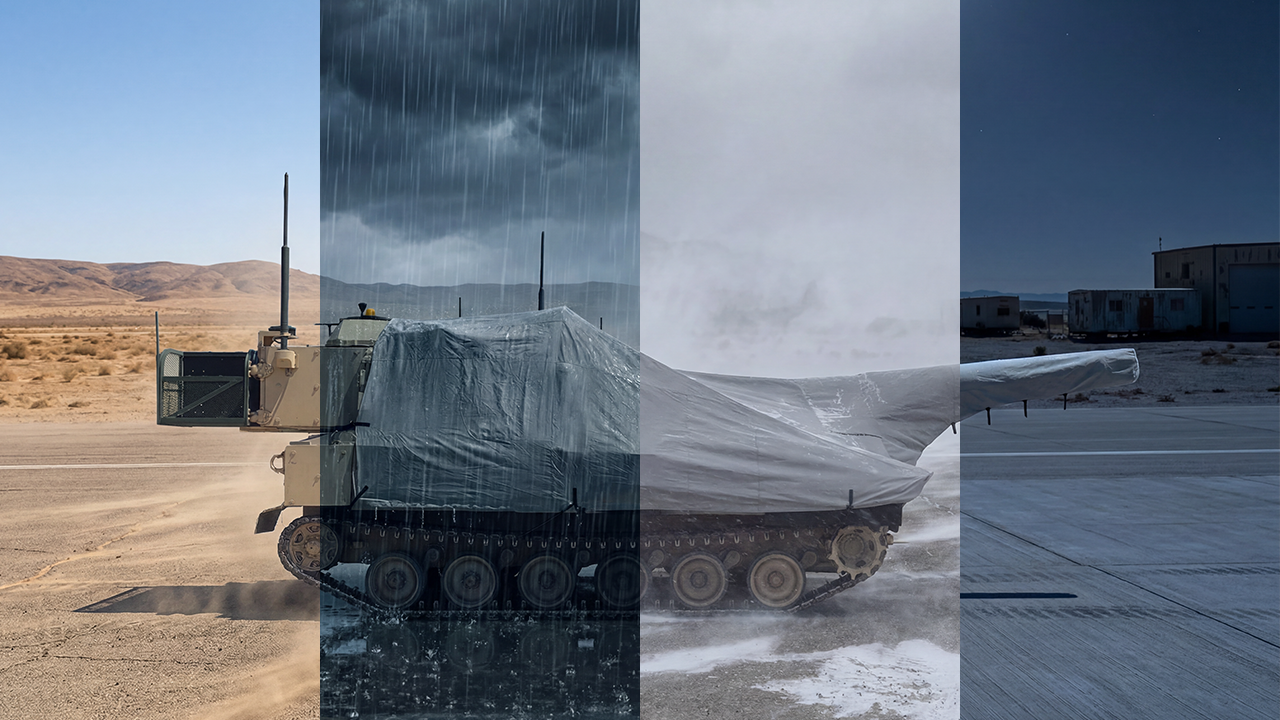
Protective covers are often treated as temporary fixes—something to deploy quickly, remove frequently, and replace when they wear out. In many organizations, they’re viewed as accessories rather than assets.
That framing is convenient.
And it’s costly.
When covers are treated as stopgaps instead of sustainment tools, they quietly introduce risk, increase maintenance burden, and undermine readiness over time. The issue isn’t whether assets are covered—it’s how and why those covers were selected in the first place.
The Problem With “Temporary” Thinking
In practice, many covers intended for short‑term use end up staying in place far longer than planned. Operational tempo shifts. Storage durations extend. Missions evolve.
When a cover isn’t designed for that reality, the downstream effects appear quickly:
Moisture is trapped rather than managed
Condensation forms beneath otherwise “protected” assets
Repeated removal and reinstallation increase wear and labor
Inspections take longer and occur more frequently
Slow degradation is masked by a false sense of protection
What looks like coverage on the surface can actually work against sustainment goals.
Covers as Part of the Sustainment System
Covers don’t operate in isolation. They directly influence the environment surrounding an asset—how moisture moves, how heat builds or dissipates, how contaminants accumulate, and how easily maintainers can access equipment.
When designed intentionally, covers can actively support sustainment by:
Managing moisture instead of trapping it
Reducing environmental exposure without creating secondary risks
Supporting predictable access for inspection and maintenance
Remaining effective across changing conditions and durations
Reducing downstream maintenance burden and lifecycle cost
In this context, a cover isn’t a disposable layer.
It’s a functional component of the sustainment system.
Where Covers Commonly Fall Short
Most cover failures aren’t dramatic. They’re incremental.
Problems typically arise when covers are selected based on availability, unit cost, or perceived simplicity—without sufficient consideration for how they’ll perform over time. Breathability, fit, durability, access, and environmental variability are treated as secondary concerns.
Over months or years, those compromises compound. Maintenance teams spend more time working around the cover than benefiting from it. Assets degrade in ways that aren’t immediately visible. And organizations pay repeatedly to address issues that could have been avoided upstream.
Reframing the Role of Covers
Effective sustainment requires a different way of thinking about protective solutions.
Covers should be evaluated not by how quickly they can be deployed, but by how well they:
Perform over the full duration of use
Interact with real environmental conditions
Support maintenance workflows rather than complicate them
Reduce lifecycle cost instead of shifting it downstream
When covers are treated as engineered solutions rather than consumables, they contribute directly to readiness, efficiency, and asset longevity.
The Takeaway
Covers are often among the first protective measures applied—and among the last to be scrutinized.
That’s a missed opportunity.
When viewed and specified correctly, covers are not placeholders or stopgaps. They are sustainment tools that quietly shape outcomes every day an asset is in storage, staged, or awaiting use.
The difference isn’t whether an asset is covered.
It’s whether the cover was designed to sustain it.